Come, Thou Fount of Every Blessing
Jonathan Gibson's daily worship liturgy takes "prone to wander" as its starting point — offering a rhythm of confession, Scripture, and prayer rooted in the Psalms and centuries of Reformed devotion.
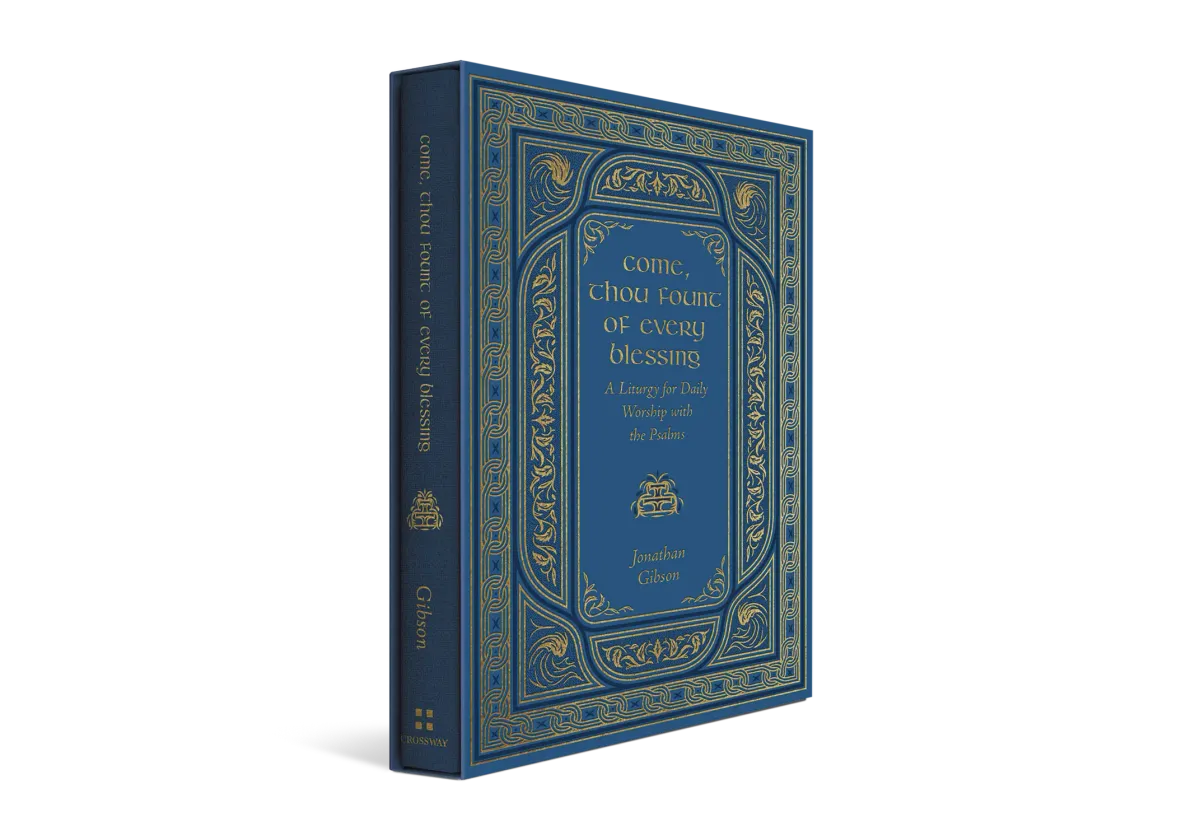
"Prone to wander, Lord I feel it, prone to leave the God I love." Robert Robinson wrote those words in 1758, and they have left congregations struck by how uncomfortably accurate it describes our experience. Jonathan Gibson takes that line as his starting point in Come, Thou Fount of Every Blessing, and in doing so gives this devotional liturgy something rarer than good content: a theological rationale.
The opening chapter traces the wandering heart from Eden forward. Since Adam's defection in the garden, Gibson argues, waywardness is not an occasional failure but the baseline condition of fallen humanity. We wander instead of worshiping because we are, by nature, prone to it. Scripture's answer to this condition is not primarily moral effort. Rather we are to return to Jesus Christ, the righteous one who walked with God faithfully where Adam did not, and where we do not. The Christian life, then, is one of ongoing struggle against the world, the flesh, and the devil, requiring watchfulness and perseverance — what Gibson, borrowing William Cowper's language, frames as striving for "a closer walk with God." Structured daily worship, he argues, is a tool given for exactly this purpose: not a spiritual achievement for the disciplined, but an aid extended to the wayward.
This framing matters for understanding what the book actually is. Come, Thou Fount is a companion to Gibson's earlier Be Thou My Vision — a monthly liturgical guide designed to rotate with it through the ordinary calendar, alongside O Come, O Come, Emmanuel for Advent and Epiphany and O Sacred Head, Now Wounded for Lent through Pentecost. The structure will feel immediately familiar to anyone at home in a Reformed worship service: Call to Worship, Confession of Sin, Assurance of Pardon, Scripture Reading, Intercessory Prayer, with the Doxology and Gloria Patri marking the contours. Gibson adds one theologically deliberate variation — a two-stage Reading of the Law, a brief reading before the Confession functioning as mirror (law exposing sin) and a fuller reading after the Assurance of Pardon functioning as guide, the third use of the law calling the forgiven believer toward consecrated life. While it is a small addition on the page, it is quietly a significant one in practice.
The book is also unusually saturated with the Psalms. Every Call to Worship is drawn from the Psalter; the Old Testament reading for the Assurance of Pardon is likewise Psalmic; reading plans include a path through all 150 Psalms in a single month. The prayers throughout bear the marks of serious historical sourcing — drawn from the ESV Prayer Bible, Matthew Henry's A Method for Prayer (1710), and The Scottish Collects (1595), themselves rooted in prayers from the French Psalter of 1563. That lineage is worth pausing over. These are not freshly minted devotional sentiments but words worn smooth by centuries of use, brought into contemporary form without being stripped of their weight. The appendices are equally well-attended, supplying the Heidelberg Catechism, the Westminster Shorter Catechism, modernized collects from the 1552 Book of Common Prayer, multiple Bible reading plans, and musical settings for the Doxology and Gloria Patri.
Be Thou My Vision has been a genuine companion in daily worship for many Christians. This volume extends and enriches that practice. For Christians who know what it is to feel their hearts grow cold in prayer and their appetite for Scripture fade, Come, Thou Fount offers what the best devotional tools have always offered: not a new discipline to master, but a path back to the one who first sought us.