
Review
C. S. Lewis in America
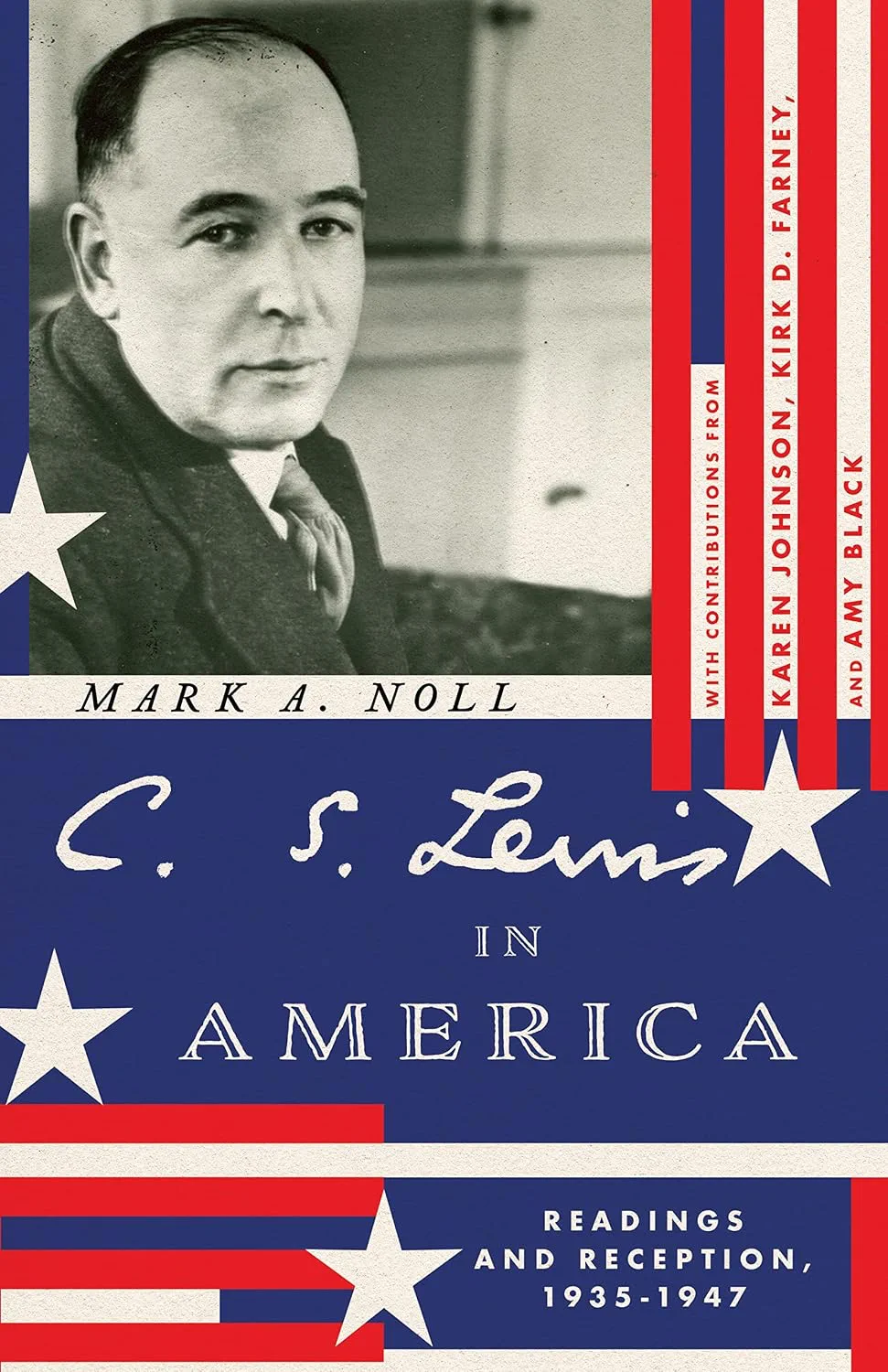
C. S. Lewis in America: Readings and Reception, 1935–1947 — Mark A. Noll
American evangelicals now claim C. S. Lewis as a beloved guide to Christian faith. But they were not the first Americans to welcome his work, nor were they always its warmest readers. In C. S. Lewis in America, Mark A. Noll examines the published responses that greeted Lewis between 1935 and 1947. The surprise is not simply who admired him. It is what their praise and doubts reveal about the churches and culture that received him.
This is not a biography or a survey of Lewis’s entire American influence. Noll focuses on the years before the Narnia stories and Mere Christianity, when The Screwtape Letters brought Lewis a much wider audience. His three chapters trace responses from Roman Catholics, the mainstream press, and Protestants. Each is followed by a response from another scholar. The result is a compact study that gives familiar books a fresh setting.
Catholic readers were among Lewis’s earliest and most eager champions. They valued his defense of Christian faith and objective moral truth, as well as his literary skill. Their praise did not erase their differences with him, especially over the church and the Christian life. Mainstream reviewers also found much to admire in his wit, imagination, and clear prose. Noll’s close attention to these reviews shows an American public still willing to hear Christian claims when they were presented with intelligence and skill.
Evangelical responses were slower and more cautious. Some conservative Presbyterian reviewers praised Lewis’s writing while questioning his theology and his approach to defending the faith. Noll records these concerns rather than pretending that admiration was universal. He also traces signs of a warmer reception through readers such as the young Elisabeth Elliot and publications associated with InterVarsity. Lewis helped show a rising generation that orthodox faith could go with serious learning, creative writing, and humor.
The book’s value lies in making us better readers of Lewis by showing how others read him. Noll does not turn the past into a simple recipe for success today. He notes that the public culture which welcomed Lewis has changed. Yet the qualities those readers prized still matter: deep learning without pretension, a clear focus on shared Christian truths, and a fruitful blend of reason and imagination. Readers interested in Lewis or American Christianity will find this a rewarding short study. It invites us to value good Christian writing beyond our own circles—and to pursue clarity and depth rather than assume that faithfulness requires choosing between them.