
Review
The Cathedral of Theology
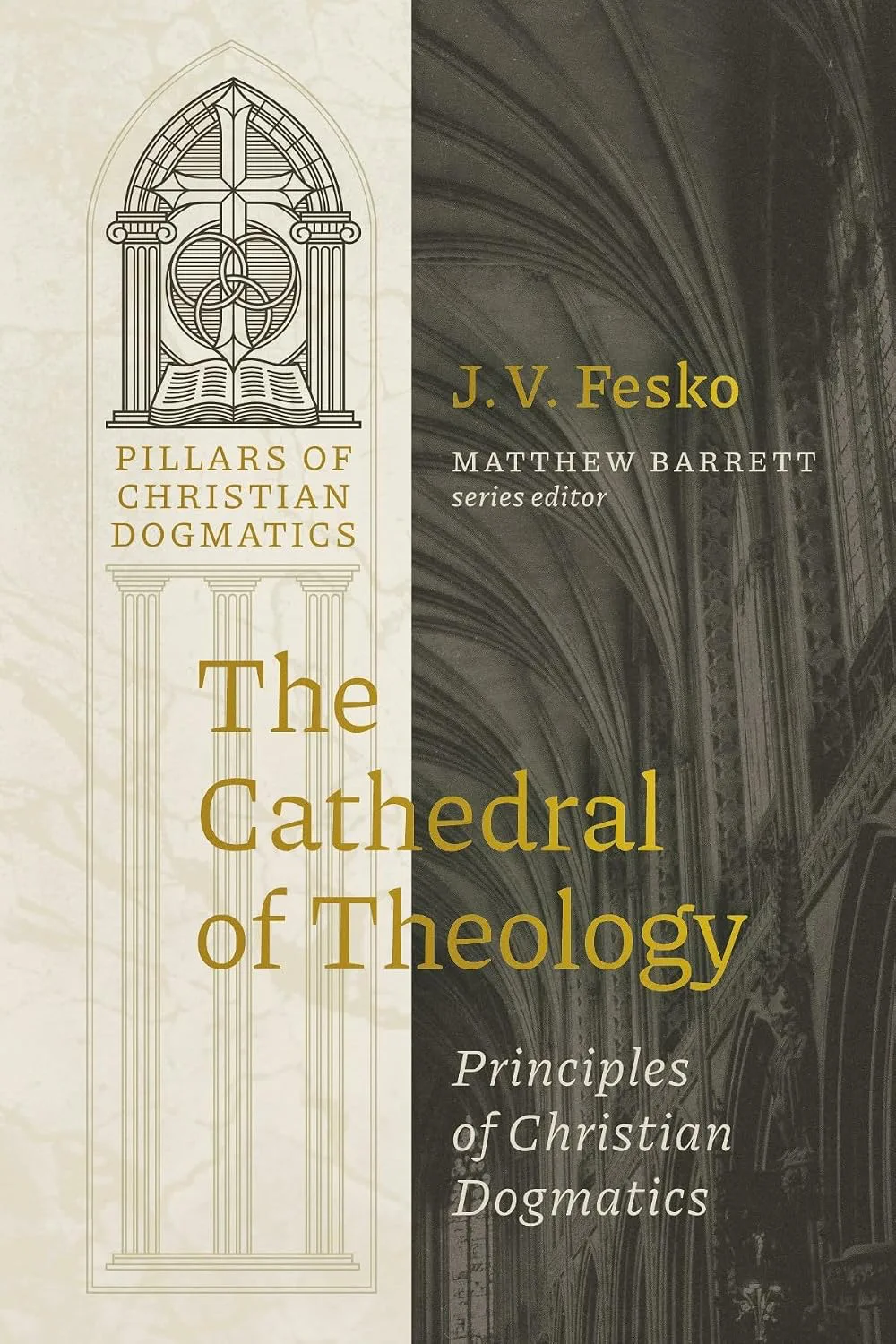
The Cathedral of Theology: Principles of Christian Dogmatics — J. V. Fesko (IVP Academic)
A person can become skilled at discussing God without becoming especially good at listening to him. We learn more terms, sharpen our arguments, and read more books, yet grow little in humility or love. J. V. Fesko’s The Cathedral of Theology addresses this danger at its roots. Before asking how we should arrange Christian doctrine, he asks how we know God and what kind of people we must become to study him faithfully. His answer shows why sound doctrine and growth in godliness belong to the same task.
The book concerns theological prolegomena—the first principles that guide our study of doctrine. That might sound like a long preface to endure before reaching the interesting material. Fesko shows why these first questions matter. We all bring beliefs about knowledge, reason, and God to our reading of Scripture. We also have ideas about how to read it. Leaving those beliefs untested does not make our theology more biblical. It just makes our errors harder to spot and correct.
The image of a cathedral gives these questions a concrete shape. A grand building cannot make up for a weak foundation. Even a sound foundation needs firm ground beneath it. For Fesko, God’s revelation gives theology its foundation, while the state of our hearts affects how we build upon it. Scripture is secure, but its students still need hearts made teachable by grace. The cathedral also has a purpose beyond its own construction. Theology should lead us to worship God and prepare us to behold him in Christ. A structure that merely displays its builder’s skill has missed its purpose.
This makes the chapter on the virtues and habits of a theologian especially valuable. Fesko shows why students of theology need love, humility, selflessness, diligence, courage, and patience. These virtues are not pious extras added to the real work of study. Pride affects what we hear. Impatience leads us to settle questions too soon. Ambition can turn another person’s argument into something to defeat rather than understand. Theology requires hard thinking, but the character of the person doing that work shapes its results.
His discussion of reading brings this argument into daily practice. We should listen with charity and admit that another writer may teach us something. Books should not become mirrors in which we see only our own opinions. Fesko also rejects an all-or-nothing approach to truth. Even writers who do not believe in Christ can offer insights worth testing in the light of Scripture. This helps explain his own broad reading of Christian tradition. He learns from Augustine, Aquinas, the Reformers, and later Reformed scholars, while testing their claims under Scripture’s authority. His Reformed faith is clear, but it does not require pretending that the church began in the sixteenth century.
This humility rests on the distinction between archetypal and ectypal theology. The terms sound forbidding, but the point is simple. Archetypal theology is God’s own infinite knowledge of himself. Ectypal theology is the limited but true knowledge he gives creatures. We can truly know God without knowing all there is to know about him. We know him because he reveals himself, not because our minds can grasp the whole of his being. Fesko shows why this distinction is more than a relic of older theology. It lets us trust what God reveals while guarding against claims to know too much. Mystery need not mean ignorance, and certainty need not mean mastery.
That balance carries into his treatment of faith, reason, and metaphysics. Reason helps us make claims clear, spot conflicts, and draw sound conclusions. It does not sit above revelation as the court that decides what God may say. Nor does faith excuse careless thinking. Fesko also defends metaphysics—the study of what things are, how they exist, and how causes relate to their effects. This is helpful for readers who distrust the use of philosophy in theology. Claims about God’s nature, creation’s dependence on him, or Christ’s two natures already involve such questions. What matters is whether our answers express biblical truth. Fesko argues for recovering the classical metaphysics used by Augustine, Aquinas, the Reformers, and later Reformed scholars, always under Scripture’s authority.
Fesko applies this same humility to the way we arrange doctrine. He resists making one doctrine the ruling principle from which we must derive all the others. This does not rule out arranging a work around covenant or following the order of topics in Romans. The danger comes when one theme becomes a rule that silences other biblical teaching. He favors treating doctrines as linked topics. Each contributes to the whole without forcing every truth to fit beneath a single idea.
The chapters on imagination and beauty show that Fesko wants more from theology than precise terms and sound logic. Under the guidance of revelation, imagination helps us grasp what a truth means and how it shapes life. Beauty, too, belongs in what we teach, how we express it, and how we live. Faithful doctrine should convey something of God’s glory. Its beauty should also appear in lives marked by compassion, honesty, and costly love. The closing discussion returns us to the opening concern with character. We cannot honor God’s truth while treating obedience as someone else’s task.
This is a demanding book, though Fesko often makes difficult ideas easier to grasp through stories, images, and clear explanations. Its accounts of theological history and its careful distinctions reward slow reading. It is not a book to rush through in search of quick tips. Pastors, seminary students, and serious readers of theology will find much help here, especially if they want to understand the beliefs beneath the doctrines they already confess.
The Cathedral of Theology succeeds most fully in showing why those foundations matter to Christian life. Its detailed scholarship serves a question every student of Scripture should face: is our knowledge of God teaching us to love him and our neighbors? Fesko shows how careful thought serves that goal. The cathedral is worth building well because it turns our attention beyond ourselves—to the God whose truth we receive, whose beauty we seek, and whose presence is our final joy.