
Review
The War for Middle Earth
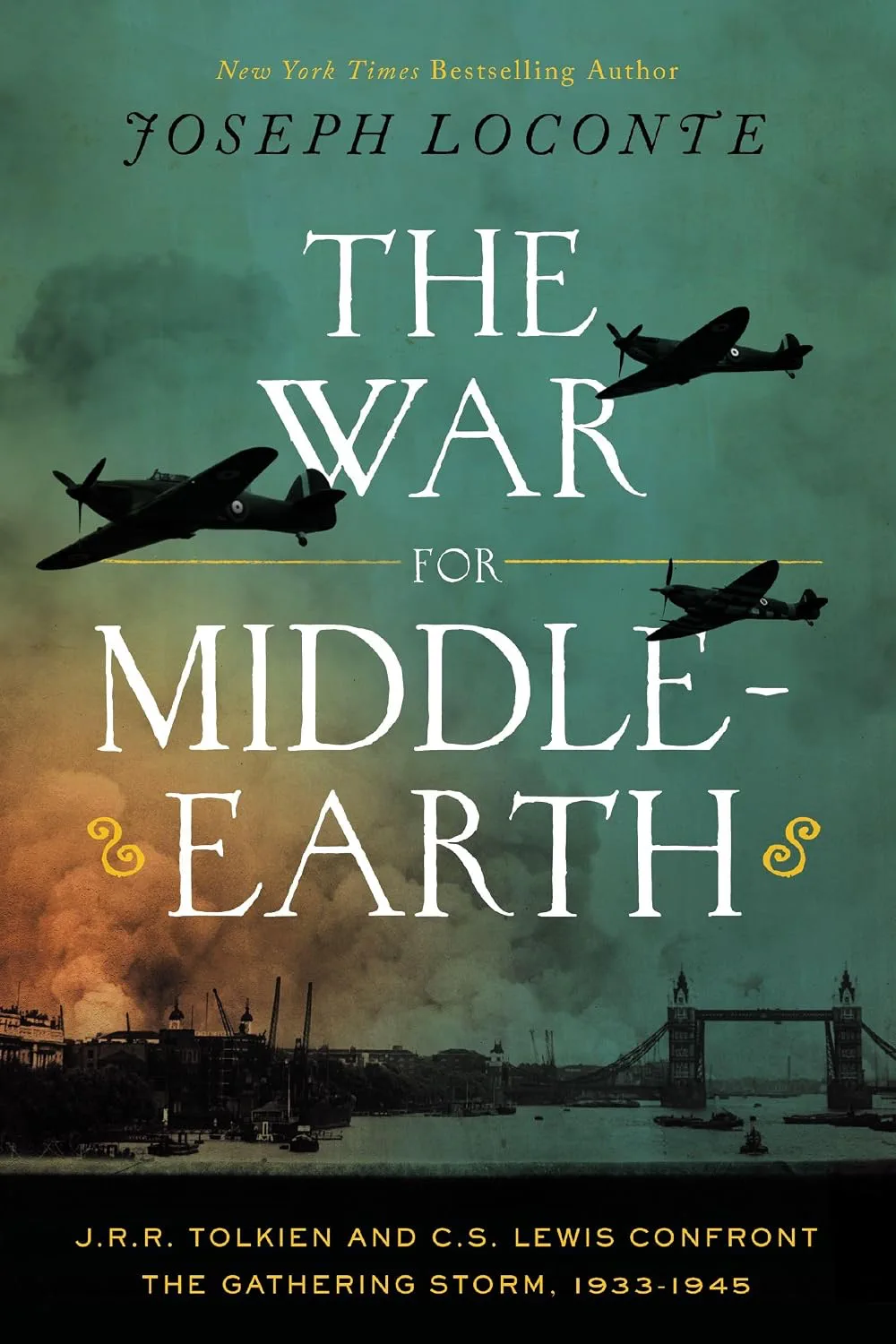
The War for Middle-earth: J.R.R. Tolkien and C.S. Lewis Confront the Gathering Storm, 1933–1945 — Joseph Loconte
Fantasy can look like a retreat from the real world. Joseph Loconte’s The War for Middle-earth makes the opposite case: the imagined worlds of Tolkien and Lewis helped readers face truths that their own age was trying to avoid. Both men had survived the First World War. As Europe moved toward another disaster, they drew on their Christian faith, their love of old books, and their friendship to write about evil without surrendering to despair.
Loconte places their work alongside the rise of Nazism and communism, the failures of appeasement, and Britain’s struggle to survive. He moves between public events and the lives of two Oxford scholars whose work continued amid fear, family duties, and wartime demands. This is not simply a tale of great books being written while history happens elsewhere. Loconte shows how the crisis sharpened questions already central to their thought: What makes a person worth defending? When must evil be resisted? Where can hope be found when human promises fail?
The book is strongest when it connects those questions to particular works. Lewis’s response to Hitler’s persuasive lies helps illuminate the origins of The Screwtape Letters. His wartime radio talks, later gathered into Mere Christianity, offered listeners a moral framework when much of their world seemed to be falling apart. Tolkien’s defense of fairy-stories likewise becomes more compelling against this background. Such stories could renew the reader’s sense of beauty and courage rather than hide the world’s horrors. Loconte acknowledges Tolkien’s rejection of a direct wartime allegory; the relationship is one of lived experience and moral imagination, not a code in which each character stands for a political figure.
This matters especially in Loconte’s account of heroism. Tolkien and Lewis knew too much about war to confuse courage with a taste for battle. Their stories honor small, frightened people who accept costly duties. Hobbits and children stand against powers far beyond their strength. Their Christian hope adds something to the older heroic tales they loved: darkness is real, but it does not possess the final word. Loconte brings out that hope without making suffering seem slight.
Readers who enjoy Tolkien and Lewis will find an engaging account of the world behind their books. Those interested in the war years will find a different way to think about cultural resistance. Loconte’s achievement is to show why stories matter in a crisis. They can train us to recognize what is worth loving—and give us courage to defend it.