Create in Me a Clean Heart
Boswell works through Psalm 51 verse by verse to show that genuine repentance begins not with the strength of our sorrow but with the abundance of God's mercy — a pastoral guide for anyone learning to turn back to God.
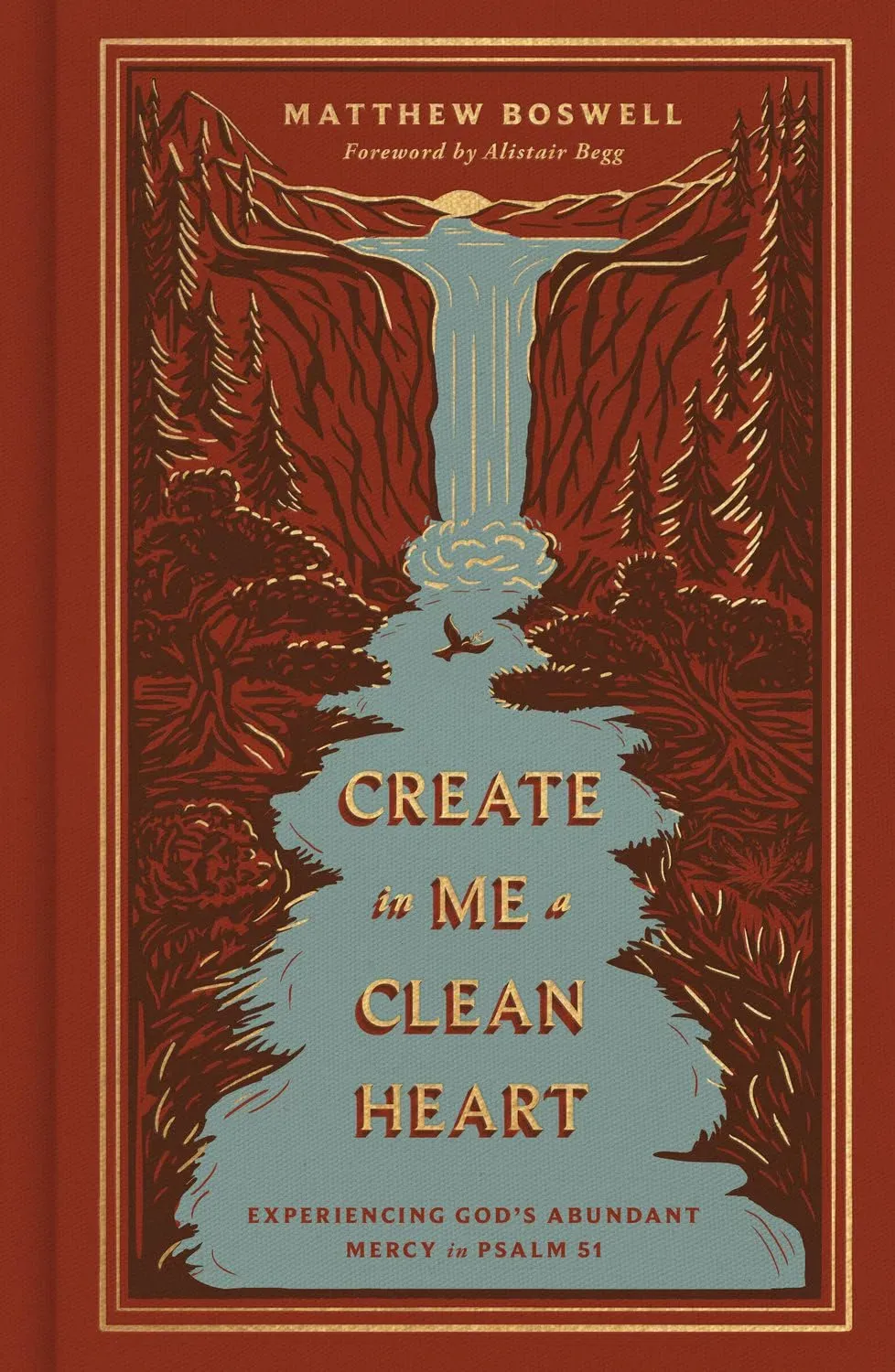
Repentance is one of those Christian words we use often enough to forget how difficult it is. We know sin must be confessed, but we can still be unsure what genuine repentance looks like—or whether we are approaching God with honest contrition or merely managing our guilt. In Create in Me a Clean Heart: Experiencing God's Abundant Mercy in Psalm 51, Matthew Boswell turns to David's great prayer of repentance to answer those questions. His central claim is that Psalm 51 is not merely the record of one king's response to one terrible sin. It gives believers a pattern for returning to God, and the pattern begins not with the strength of our sorrow but with the abundance of God's mercy.
Boswell is a pastor and hymn writer, and he works through Psalm 51 verse by verse in eleven short chapters arranged in four parts: a repentant heart, a restored heart, a renewed heart, and a responsive heart. This is not a technical commentary and does not try to be. It is a pastoral exposition, and his stated aim captures the whole book: "at the heart of Psalm 51 we find a heart of genuine repentance, and where we find a heart of genuine repentance, we find the very heart of God." The book teaches us how to repent by teaching us who God is.
The opening chapters set the pattern. Boswell retells the story from 2 Samuel 11–12—the rooftop, the cover-up, Uriah's murder, Nathan's confrontation—and gives it enough space that the reader feels its weight. Then comes the psalm's first line: "Have mercy on me, O God, according to your steadfast love." David begins by looking to God's character, not by measuring the strength of his own grief. Boswell connects the appeal to hesed, God's loyal covenant love, and notes that the word translated "mercy" is plural in Hebrew. David is asking for abundant mercy, not a single act of kindness. That ordering—God first, then ourselves—runs through the rest of the book. When Boswell explains David's three words for sin, and when he lingers on bara, the Hebrew word for "create," his point is the same: David is not asking for self-improvement. He is asking God to do what only God can do.
The most pastorally helpful chapter may be the one on Psalm 51:11, where David asks God not to take his Holy Spirit from him. That verse can frighten anxious Christians. Boswell distinguishes our union with Christ from our daily fellowship with God: "sin does not sever our relationship with God; it hinders our fellowship with him." The comfort lands without becoming an excuse. Alongside the exposition, Boswell's illustrations carry real weight—a morning in the truck with his son, both of them crying over hidden sin; his daughter's honest baptism testimony about years of performing a faith she did not possess; the dreadful "silence of sin" set against the peaceful quiet of a house with a sleeping child in it. And the closing movement, where David's prayer widens from his own restoration to the good of Zion, keeps personal repentance from staying merely personal.
Two limitations are worth naming. First, the illustrations and cross-references—Peter's restoration, the Samaritan woman, the Welsh Revival—sometimes draw attention away from Psalm 51 itself, so the psalm functions more as a starting point than as the text Boswell continually returns to. Second, the book rarely pauses over the psalm's harder questions. Boswell notes that some scholars think verses 18–19 were added later, during the exile, but since he treats those verses as the emotional climax of the book, a reader might wish he had said more about why he reads them as David's. Neither issue undermines what the book is trying to do; both simply mark its genre as devotional rather than academic.
That genre is exactly right for its intended reader. This book is for the Christian who has wasted away in some secret sin and does not know how to start talking to God about it, for the small group working through what real confession looks like, and for the pastor looking for a book to put in such a person's hands. Readers wanting detailed exegesis or sustained engagement with scholarly questions should look elsewhere. But for anyone who wants Psalm 51 turned from a familiar passage into a prayer they can actually pray, Create in Me a Clean Heart is clear-eyed about sin, warm about grace, and a genuinely helpful guide.